
.png)
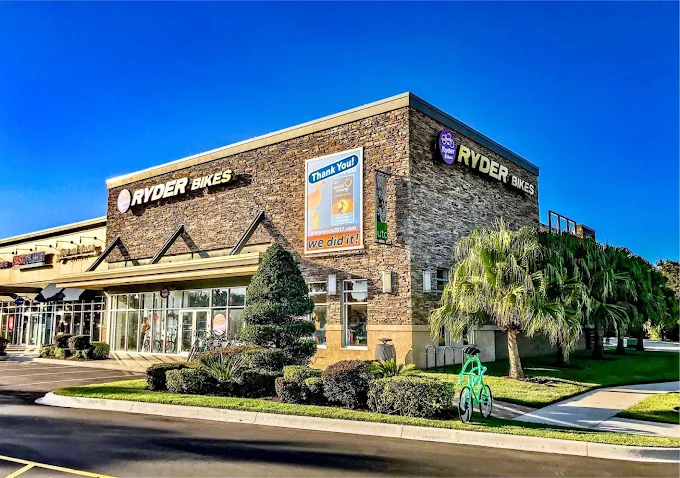
In the world of specialty retail, we often celebrate the "passionate amateur"—the hobbyist who turns a love for the product into a storefront. But Paul, the owner of Ryder Bikes in the Bradenton-Sarasota area, offers a different, more sustainable blueprint. His story is a masterclass in Operational Precision and Calculated Risk.
Paul’s journey came full circle: he started as a 13-year-old BMX kid sweeping floors at a local shop before spending years in the corporate engine room of Staples, working in finance, store operations, and supply chain. When he returned to local retail in 2007, he brought a corporate toolkit to a "mom-and-pop" world.
Through a recession, the opening and closing of multiple locations, and a global pandemic, Paul has maintained a steady hand. For specialty retail owners, his "Calculated Professional" approach provides four vital lessons in longevity.
1. The SOP Advantage: Scaling with Systems
Many single-store owners manage by instinct, keeping every detail "close to the vest". Paul’s experience scaling to three locations taught him that growth requires a departure from "gut feel" in favor of Standard Operating Procedures (SOPs).
"When we had multiple stores, the big thing it did is it made us look at what were standard operating procedures—put all those in place... We have a really good setup from a standpoint of having rules and requirements for all the folks in the store.""When we had multiple stores, the big thing it did is it made us look at what were standard operating procedures—put all those in place... We have a really good setup from a standpoint of having rules and requirements for all the folks in the store."
By treating a single shop with the same operational rigor as a multi-store chain, Paul ensured that the business could run effectively without him needing to be present at every location every day.
2. Recession Scaling: The Art of the Lease
While most businesses were retreating during the 2008-2009 recession, Paul was scaling up. He didn't do this through reckless gambling, but through a "calculated risk" focused on real estate and fixed costs.
When a nearby shop went under, Paul didn't just buy the inventory; he negotiated an "extremely favorable" lease with a landlord desperate for a tenant.
"We gave them kind of an offer that we would move in for that we didn't think that they would take... and so it was an extremely favorable lease for us."
By keeping his "out" in mind—buying the building for his first location—and securing low-cost entries for his expansions, Paul ensured that the business had the capital to weather the storms and "take advantage" of the surges when they arrived.
Paul’s Lease Negotiation Checklist
If you are looking to open a new location or renegotiate your current space, Paul’s strategy suggests focusing on the following:
- Retain Legal Counsel: Never sign a lease without a lawyer reviewing the terms, as many landlords present one-sided agreements.
- Expose Hidden Costs: Look beyond the base rent and Common Area Maintenance (CAM). Identify costs for shared dumpsters, shared maintenance, or mandatory "beautification" fees.
- Negotiate Options: Seek favorable extensions, such as five-year options with additional two-year extensions at the end, rather than short-term fixed leases.
- Audit Demographics: Ensure the local average income and community type support the specific type of shop you want to be (e.g., don't put a "bougie" high-end shop in an area that won't support it).

3. Financial Literacy: The Anti-Hobbyist Mindset
Paul’s most urgent advice for new owners is to stop "shooting blind". He argues that a love for the product is no substitute for an intimate understanding of a balance sheet, a P&L, and a cash flow statement.
"If you don't understand where your numbers are coming from, you're just kind of shooting blind... if you can't [pay yourself] and still have a profit at the bottom line at the end, then that business isn't worth running."
By utilizing industry benchmarks, such as the NBDA's "cost of doing business" studies, Paul was able to identify "holes" in a shop's performance. When he first took over his shop, he realized the previous owner was ignoring the high-end road category. By trusting the data over the "family-run" status quo, Paul increased sales by over 30% in his first full year.
Paul’s Financial Health Checklist
To move from "hobbyist" to "professional," Paul recommends mastering these pillars:
- Master the "Big Three": Get a base-level education in Balance Sheets, P&L statements, and Cash Flow statements.
- Use Industry Benchmarks: Utilize resources like TrackFly’s Industry Reports and the National Bike Dealers Association (NBDA) "cost of doing business" studies to see how your store compares to typical sales volumes in main categories like labor, accessories, and bikes.
- Avoid Under-Capitalization: Ensure you have enough capital in reserve to get through at least the first year of operation.
- Proactive Cash Flow Communication: Don't wait until a bill is due to tell a supplier you can't pay. Use your cash flow statements to identify "soft spots" months in advance and communicate with credit managers early.

4. Brand Partnerships: High Tides and Open Lines
Paul views community involvement and brand partnerships as a shared investment. He operates on the "high tide raises all boats" theory: if the community and local clubs thrive, the shop thrives.
His outreach is extensive, ranging from donating 50 bikes to underprivileged kids to partnering with local police and sheriff's offices. Crucially, he involves his partners in the success.
"We leaned back into all the clubs that we support and asked them to fund helmets for the kids... so all the clubs chipped back in... we turned around and gave the kids helmets, lights, and locks to go with the bikes."
This creates a "trust-built" relationship rather than a "transactional" one. By showcasing "what they do for good" in the store, Ryder Bikes makes customers feel like their purchase is an active contribution to the local community.
This philosophy extends to his suppliers. He avoids "transactional" relationships, opting instead for "trust-built" partnerships where he spends time talking with reps about the industry before orders are ever placed.
"We want to make sure that we can play nicely with everybody and I think most of the suppliers want the same thing—it's just those open lines of communication."
Summary
Paul’s 19-year tenure at Ryder Bikes proves that professionalism and passion aren't mutually exclusive—they are partners. The shops that survive aren't just those with the best gear, but those with the best financial foundation and operational systems. By combining corporate discipline with local community roots, Paul has built a business that is as durable as the bikes he sells.
Want to easily apply Paul's lessons for specialty retailers to your business?
Sign up for free

